
Why Batch Consistency Matters More Than Samples in Long-Term Contact Lens Distribution
A distributor receives a new contact lens sample set. The lens appearance meets expectations. The packaging looks correct. The specifications match what was discussed.
That is useful evidence—but it answers only the first question: Is this product worth considering?
Several months later, the same SKU may already be stocked by retailers, shown in ecommerce listings, reordered by existing buyers, and included in the distributor’s replenishment plan.
The purchasing question has changed.
It is no longer just whether the original sample was good. It is whether the supplier can keep delivering the product the market already knows.
Sample approval qualifies the product. Repeated batches qualify the supply.
For distributors building a product line around repeat orders, the second test eventually matters more than the first.
A Good Sample Cannot Answer a Long-Term Supply Question
Samples make an unfamiliar product tangible. Buyers can inspect lens appearance, review packaging, confirm basic specifications, and decide whether a product deserves further evaluation.
What a sample cannot do is predict repetition.
It cannot show whether a later production batch will remain comparable to what was approved, whether confirmed product details will remain stable across repeat orders, or what will happen when a future shipment raises a question the original sample did not.
The problem is not that samples are unreliable. The problem is asking a sample to predict something that has not happened yet.
This also separates batch consistency from [replenishment reliability]. Replenishment reliability asks whether a supplier can keep supporting repeat demand. Batch consistency asks whether the product being replenished continues to meet the commercial expectations established by earlier orders.
A distributor needs both.
Once a SKU Starts Selling, Consistency Protects Its Commercial Identity
Before launch, a colored contact lens SKU is mainly a purchasing decision.
After repeated sales, retailers recognize it. Product images and descriptions may already be published online. Sales teams know where it fits in the assortment. Customers may return to buy the same style again. The distributor may begin forecasting its demand and holding more inventory for future replenishment.
The SKU has developed a commercial identity.
Consider a natural brown lens that has been supplied to the same retailers for several months. When those retailers reorder it, they are not asking for another brown lens that happens to look similar. They expect the product associated with that SKU.
That changes the commercial impact of variation.
A noticeable difference in a later batch can make retailers compare new stock with earlier units. An ecommerce seller may question whether existing product photography still represents the product accurately. The distributor may need to investigate before releasing inventory that would otherwise have moved through a routine replenishment cycle.
In other words, inconsistency can turn an established SKU back into something the channel has to evaluate again.
For a product with repeat demand, consistency therefore protects more than the physical product. It helps preserve the expectation already built around that SKU.
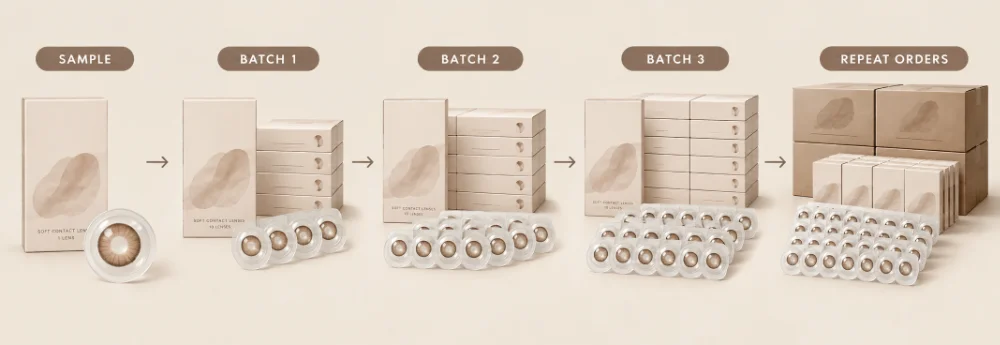
What Should Stay Consistent From One Order to the Next?
Batch consistency does not mean claiming that every individual unit must look perfectly identical under every possible condition.
For a distributor, the more useful question is whether commercially important characteristics continue to correspond with the approved product and specifications.
Some of those characteristics are visible in the product itself: lens appearance and pattern execution, color presentation, packaging, labeling, and other elements associated with the SKU.
Others sit behind the visible product.
A repeat order should still correspond to the specifications and product version the distributor believes it is buying. If something relevant changes, the buyer should not have to discover it only after comparing new inventory with stock already in the warehouse.
The record behind the product matters for the same reason.
If a distributor raises a question about a shipment, identifying the relevant production batch and understanding which product or specification version it belongs to gives both sides something concrete to investigate. Without that connection, discussions can quickly become vague.
Batch records, product specifications, and communication are not separate from consistency. They are part of what makes consistency possible to evaluate.
The Difficult Moment Is When Old and New Batches Meet
Imagine a distributor that has been selling the same natural brown colored contact lens for several reorder cycles.
A new shipment arrives while some inventory from the previous batch is still in the warehouse. During handling, the team notices that a product characteristic in the latest batch appears different enough from the remaining stock to require clarification.
At first, the obvious question is whether something is wrong with the new batch.
But the distributor faces a more practical problem:
Can the old and new inventory continue moving through the market as the same SKU without creating confusion?
Some of the previous batch may already be on retailer shelves. Ecommerce listings may use photographs taken from earlier inventory. Repeat customers may already associate the SKU with a particular appearance. Retailers receiving replenishment may still have units from the previous shipment.
Now two batches coexist inside one distribution network.
If the difference is identified before the new stock leaves the distributor’s control, there is an opportunity to clarify what changed and decide how to handle it.
If retailers are the first to notice it, what began as an internal supply question now involves the channel.
That is why the timing of detection matters. The later a meaningful variation is discovered, the more of the distribution chain may already be involved.
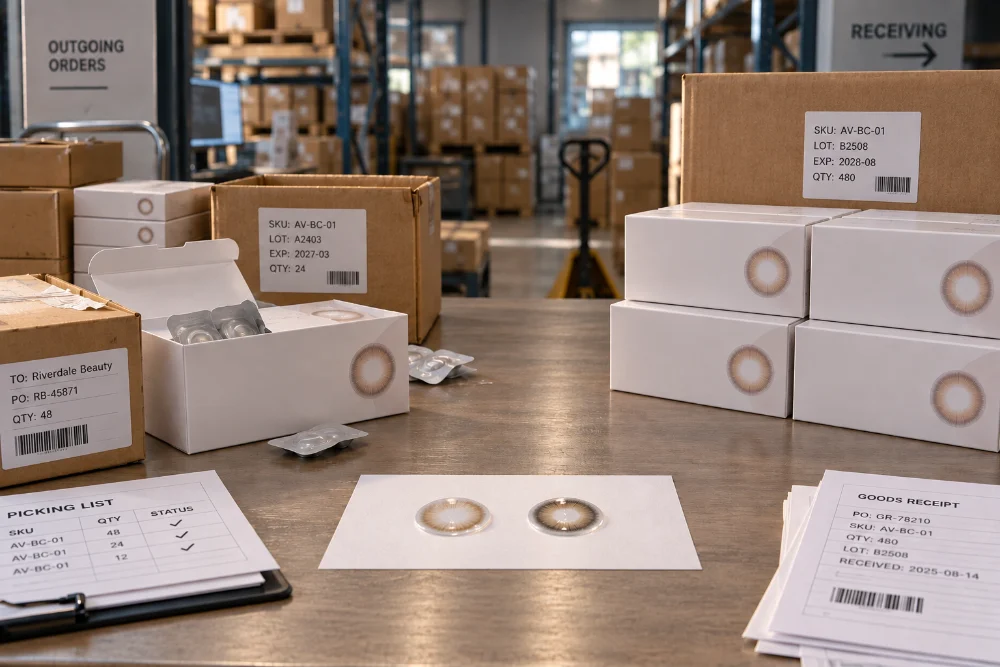
The Evidence That Matters Accumulates Between Orders
At the beginning of a supplier relationship, buyers have limited history to examine. Decisions naturally depend more on samples, specifications, documentation, and supplier communication.
Actual orders gradually change that.
The first commercial shipment can be compared with what was approved. Later replenishments reveal whether the same commercial expectations continue to hold. Over time, the distributor also learns what happens when a question arises—not from a sales presentation, but from the supplier’s actual response.
A perfectly clean history is not the only useful evidence.
Sometimes a real deviation reveals more about a supplier than another successful sample does.
Can the relevant batch be identified? Can the difference be investigated rather than answered only in general terms? If corrective action is needed, does later supply show that the problem has been brought under control?
An isolated issue that is identified and controlled is different from the same unexplained problem appearing across multiple orders.
This is why supply history becomes increasingly valuable. It shows not only what was delivered, but how the relationship behaves when something does not go as expected.
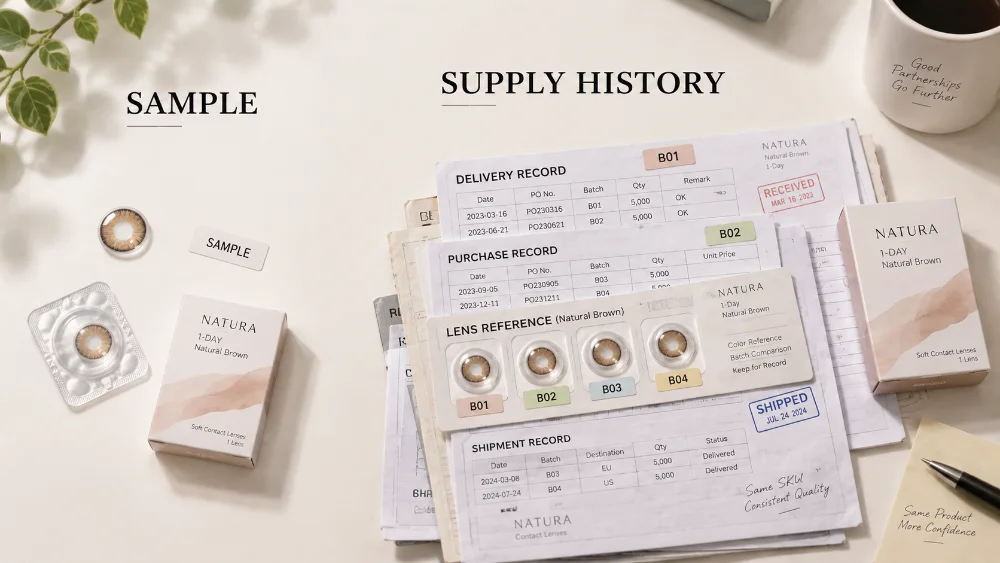
Four Questions Worth Asking Before a Product Becomes a Long-Term Line
Distributors do not need to turn every supplier conversation into a factory audit. A few practical questions can reveal whether future consistency will actually be possible to evaluate.
How do you identify and trace individual production batches?
If a question arises later, both sides need to know which batch is being discussed. Traceability gives the investigation a specific starting point.
How are changes to an approved product or specification communicated?
Relevant changes are easier to manage when they are understood before new inventory enters the existing sales flow.
What happens when a distributor reports a difference between batches?
A useful answer is not simply that differences never happen. What matters is whether the supplier can identify the batch, investigate the issue, and communicate what was found.
What records can be reviewed when investigating a repeat-order issue?
As purchasing history grows, documentation can help replace assumptions with evidence.
None of these questions guarantees that every future order will be problem-free. They help establish whether the distributor will have enough information to understand what happened when a question does arise.
The Real Test Starts After Sample Approval
Early in a supplier relationship, confidence necessarily depends heavily on what can be evaluated before purchase.
That balance should change as real orders accumulate.
A distributor can begin judging the supplier by the product that actually arrived, the continuity between replenishments, the way unexpected differences were handled, and what happened in the orders that followed.
This history also makes later sourcing decisions more grounded. An isolated, explained deviation is not the same as a pattern that continues across orders without satisfactory resolution. If unresolved problems do accumulate, the distributor may eventually need to consider [how to reduce risk when switching suppliers] rather than treating every shipment as another isolated incident.
For distributors evaluating Mislens for ongoing supply, discussions can extend beyond initial samples to product specifications, documentation, repeat-order requirements, and how ongoing supply is managed. This gives buyers more context before deciding whether a product belongs in a long-term portfolio.
A good sample is where evaluation begins. It is repeated supply that shows what a long-term distributor relationship can actually support.
For a distributor, supplier quality is not only what arrives first. It is what keeps arriving.
Discuss Your Distribution Requirements
Tell us which contact lens products, specifications, and market you are sourcing for. Our team can help you review available products and discuss ongoing supply requirements.
Need to Evaluate This for Your Market?
Tell us about your market, sales channel or purchasing plan, and our team can discuss the next step with you.