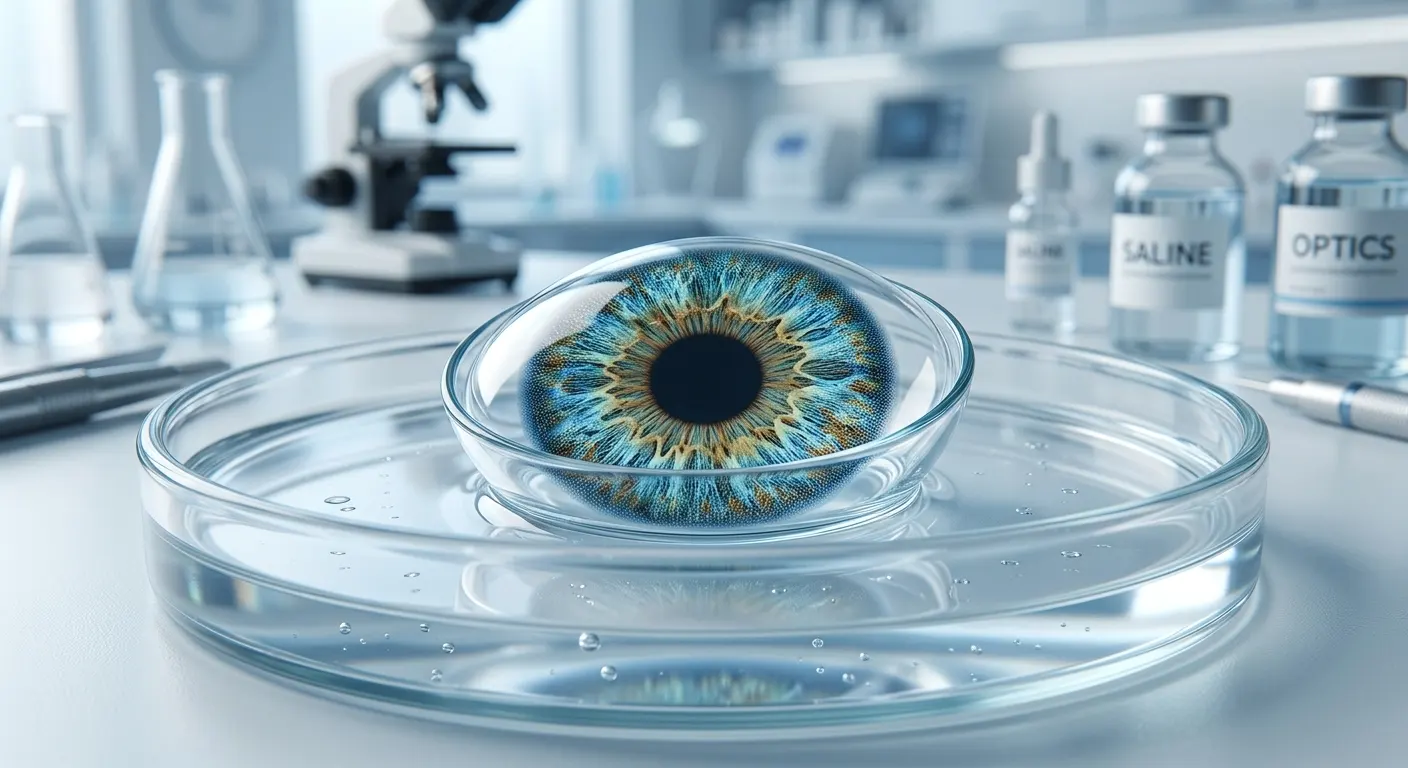
In the 2026 color lens market, certificates are no longer "optional badges"—they are your competitive moat. As platforms like TikTok and Amazon automate compliance checks and customs agencies tighten inspections, the "gray market" is collapsing. To survive and scale, you must stop buying plastic and start buying market access.
The $100,000 Mistake: Why Professionalism is Profit
Most color contact lens distributors start with a focus on "price per pair." They spend weeks negotiating for a $0.20 discount. Then, they ship a $50,000 container to the U.S. or Europe, only to have it seized and incinerated by customs because of a paperwork error.
Professionalism isn't a cost; it’s an insurance policy. In this industry, "cheap" is the most expensive thing you can buy.
If you want to build a brand that lasts beyond the next six months, you need to understand the hierarchy of certifications. There are three "pillars" that determine where you can sell, how much you can charge, and how well you sleep at night.
Pillar 1: FDA 510(k) – The "Death Line" of the U.S. Market
The United States is the most lucrative—and most dangerous—market for color contact lenses. The FDA does not recognize the term "cosmetic lens." In the eyes of the law, a lens with zero power is identical to a surgical implant: it is a Class II or Class III Medical Device.
1. The Deception: "FDA Registered" vs. "FDA Cleared"
This is the single most common "scam" in the wholesale industry. A factory will show you an Establishment Registration document.
The Truth: Anyone can register a facility with the FDA for a small fee. It is a directory listing.
The Reality: To sell a product, that specific product must have 510(k) Clearance. This requires clinical data, material biocompatibility testing, and a rigorous review of the "Sandwich Technology" used to seal pigments.
2. The Buyer’s Audit: How to Verify a 510(k)
When a supplier claims FDA clearance, do not ask for a PDF. Ask for the K-number (e.g., K123456).
Check the Material: Does the 510(k) match the material you are buying (HEMA vs. Silicone Hydrogel)?
Check the Brand/Manufacturer: If the 510(k) belongs to "Factory A" but you are buying from "Trading Company B" without a Letter of Authorization (LOA), your goods are illegal.
3. The 2026 Risk Profile
The FDA has increased its scrutiny of "Gray Market" imports from TikTok and Shopify stores. Selling without a 510(k) is no longer a "minor risk"—it is a fast track to being blacklisted by payment processors and having your inventory seized at the border.
Pillar 2: CE Marking (MDR) – The European Passport
If you are targeting the EU, the rules of the game have fundamentally changed. The old Medical Device Directive (MDD) is dead. The new Medical Device Regulation (MDR 2017/745) is the new law of the land.
1. Why MDD Certificates are "Ticking Bombs"
Many factories are still clinging to old MDD certificates, claiming they are valid under "transition periods."
The Professional Perspective: Customs agents in Germany, France, and Italy are already rejecting MDD-labeled goods that don't meet the strict MDR labeling requirements.
The Moat: If you source from an MDR-compliant factory today, you are ahead of 90% of your competitors who will be forced out of the market when the transition period ends.
2. The Notified Body (NB) Check
A valid CE certificate for color lenses (Class IIa or IIb) must be issued by a **Notified Body**. Look for the 4-digit number next to the CE logo (e.g., CE 0123). If there is no number, it is a "Self-Declaration," which is invalid for contact lenses.
3. Technical File Audits
Under MDR, the manufacturer must maintain a "Technical File" including a Clinical Evaluation Report (CER). As a distributor, you should ask: "Has your Technical File been audited under the new MDR standards?" A "No" is your signal to keep looking.
Pillar 3: ISO 13485 – The DNA of Quality
While FDA and CE are "Market Access" licenses, **ISO 13485** is a "Quality System" backbone. It doesn't tell you if the product can be sold; it tells you if the factory is capable of making it correctly every single time.
1. The Problem of "Batch Drifting"
In color contact lenses manufacturing, the biggest risk is inconsistency.
- Batch 1: Beautiful "Ocean Blue."
- Batch 2: Muddy "Gray-Green."
- Batch 3: Pigment leeches onto the eye.
ISO 13485 forces a factory to have a traceable quality management system. If Batch 3 fails, the ISO system allows you to trace exactly which raw material or machine failed. Without ISO 13485, you are buying from a "workshop," not a medical manufacturer.
2. Sterilization and Biocompatibility
ISO 13485 ensures the factory follows strict protocols for:
- Moist Heat Sterilization:** Ensuring 100% of bacteria are killed.
- EO Sterilization Stability:** Ensuring no chemical residue is left on the lens.
- Sandwich Process Verification:** Ensuring the color layer is perfectly sealed between two clear layers of HEMA.
Global Market Intelligence: Where Can You Sell?
As a distributor, you need to match your inventory to your geography. Not every country requires an FDA 510(k).
Tier 1: The High-Compliance Markets (The "Profit" Zones)
- Regions: USA, EU, Japan (PMDA), South Korea (MFDS), Singapore (HSA).
- Requirements: Absolute compliance. No FDA/CE = No business.
- Strategy: High barrier to entry, but high margins and brand stability.
Tier 2: The Medium-Compliance Markets (The "Growth" Zones)
- Regions:** Saudi Arabia (SFDA), UAE (MOHAP), Mexico (COFEPRIS), Indonesia, Thailand.
- Requirements:** They often accept **CE + ISO 13485** as a "Universal Pass."
- Strategy:** These are the best markets for 2026. They have massive volume, healthy margins, and don't require the multi-million dollar investment of a U.S. FDA 510(k).
Tier 3: The High-Velocity Markets (The "Volume" Zones)
- Regions: Philippines, Iraq, Vietnam, Colombia, parts of Africa.
- Requirements: Often rely on a **Free Sale Certificate (CFS)** and ISO 13485.
- Strategy: These markets are perfect for "Explosive Growth." Regulatory enforcement is lower, but the risk of "gray market" competition is higher. To win here, you need Service Speed and Stock Stability.
2026 Strategic Forecast: The "Certification Purge"
Within the next 36 months, the "amateur" era of the color lens industry will end.
- Platform Automation: TikTok and Amazon will use AI to verify certificate numbers against global databases (EUDAMED/FDA) in real-time.
- Customs Intelligence: Border agencies are sharing more data. A shipment flagged in the UK will likely be flagged in the US.
- Consumer Awareness: End-users are becoming "Certification Savvy." They are looking for the CE and FDA logos on the box as a sign of safety.
The Conclusion: If your supplier doesn't have a 5-year regulatory roadmap, you are building your business on a foundation of sand.
Frequently Asked Questions (FAQ)
Q: Can I sell colored contacts without FDA clearance if they have no degree (Plano)?
A: No. In the U.S. and most Tier 1 markets, all contact lenses are medical devices, regardless of whether they correct vision.
Q: Is ISO 13485 enough to sell in Europe?
A: No. ISO 13485 is for the factory's quality system. You still need a CE MDR certificate for the specific product line to sell legally in the EU.
Q: What is a Free Sale Certificate (CFS)?
A: A CFS is a document issued by the regulatory body of the country of manufacture, stating that the product is legally sold there. It is often a key requirement for importing into the Middle East and SE Asia.
Q: How do I know if a CE certificate is fake?
Check the Notified Body number on the [NANDO database]. If the number doesn't exist or the scope doesn't cover "Contact Lenses," the certificate is invalid.
Take the Next Step in Your Distribution Journey
Understanding certifications is the first step. Implementing this knowledge into a profitable business model is the second.
This article is only Part 1 of our comprehensive series for professional importers. If you want to master the art of supplier auditing, ROI modeling, and market scaling, you need the full blueprint.
Are you looking for a partner that takes compliance as seriously as you do? We don't just provide high-quality lenses; we provide the regulatory security you need to grow a global brand.
Let’s discuss your target market, verify your requirements, and build a safe, profitable future together.
[Explore the Mislens Distributor Portal and Scale with Certainty]