In the fast-moving world of beauty and optical retail, distributors often make a classic mistake: they chase the "shining object." They look for the neon pinks, the dramatic cosplays, and the avant-garde patterns to fill their catalogs.
While those colors grab attention, they don’t build empires.
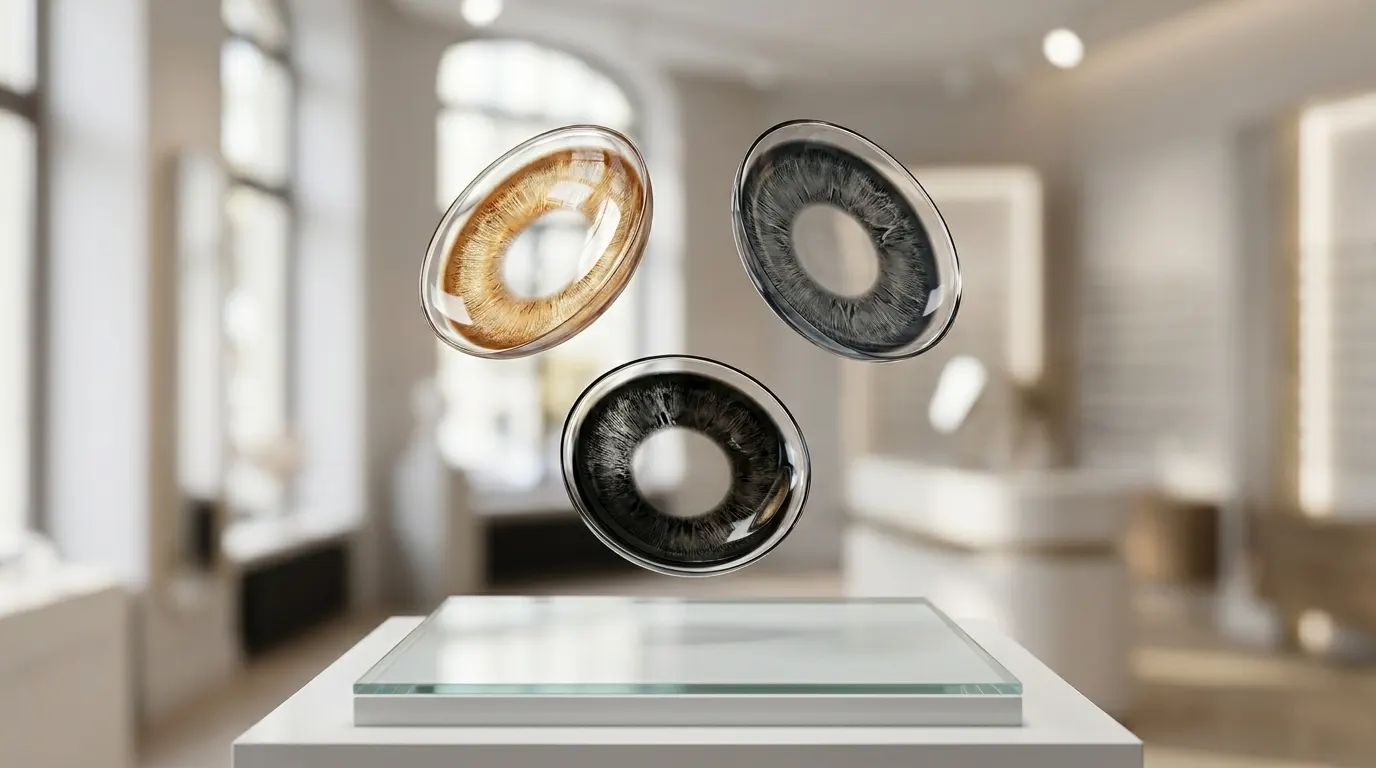
Brown, Gray, and Black lenses are not just "basic" colors. They are your Anchor SKUs.
In the colored contact lens industry, the difference between a struggling distributor and a market leader comes down to understanding the Psychology of the Daily Wearer. Natural shades represent 70-80% of the market’s volume because they solve a universal human desire: to look better without looking "different."
For a distributor, these colors represent Cash Flow, Predictability, and Trust. If you get the natural series right, your sub-retailers will never leave you.
1. The 80/20 Rule of Contact Lens Distribution
Most colored contact lens distributors see their inventory as a collection of aesthetic choices. This is wrong. You should see your inventory as a Risk-to-Reward Ratio.
The 20% (The Flash): Creative colors that win social media likes but sit in the warehouse for months.
The 80% (The Foundation): Brown, Gray, and Black lenses that move every single day.
“Don’t find customers for your products. Find products for your customers.” Your customers—the retail shops and online boutiques—are terrified of "Dead Stock." When you provide them with a perfected Natural Series, you aren't selling them lenses; you are selling them Inventory Security.
2. Brown Contacts: The Multi-Billion Dollar "Better Version of Me"
When we talk about wholesale brown contact lenses, we are talking about the largest market segment in the world, particularly in Asia, the Middle East, and Latin America.
The Psychology:
The wearer isn’t looking to become a new person. They want to be "Me, but more energetic." Brown lenses offer a psychological bridge—they enhance the iris depth, hide fatigue, and brighten the face.
Technical Selling Points for Distributors:
To dominate the brown lens market, you must move beyond "color." You must educate your retailers on Pixel Density and Layering.
The Dot-Matrix Advantage: Our high-end brown series doesn't use a solid block of color. It uses a variable-density dot pattern that allows the natural iris to "bleed" through. This creates a 3D effect that prevents the "doll-eye" look.
The Warmth Factor: We offer browns ranging from Latte (for lighter skin tones) to Deep Espresso (for dark irises). Providing a spectrum of brown is how you become a specialist, not just a vendor.
3. Gray Lenses: The "Quiet Luxury" of the Eye Beauty World
If Brown is the entry point, Gray is the sophisticated upgrade. In the B2B world, gray lenses represent a higher-margin opportunity because they appeal to the "Fashion-Forward Professional."
The Subtle Pivot:
Gray is the only color that can look both "Natural" and "Striking" at the same time. It provides a cool-toned contrast that makes the sclera (the white of the eye) look whiter and healthier.
What Distributors Must Look For:
Transition Zones: The most common complaint about cheap gray lenses is the "Harsh Ring." A premium gray lens must have a transparent center transition so the pupil can dilate without showing a sharp color break.
The "Cloud" Effect: Our gray series focuses on a misty, soft-focus finish. For your retail clients, this means fewer returns and higher customer satisfaction because the lens looks "expensive" even at a distance.
Use the keyword "Natural Gray Colored Contacts" in your product descriptions. Avoid "Silver" or "Steel" as they imply a metallic, artificial look that scares away daily-wear consumers.
4. Black Lenses: Reinventing the Deepest Depth
For years, "Black Lenses" had a bad reputation for looking like "flat plastic disks." But the market has changed. The modern consumer wants Definition, not just Darkness.
The "Deep-V" Effect:
A high-quality black lens is actually a masterpiece of transparency. It’s about the Limbal Ring. By creating a soft, feathered outer edge in deep charcoal or black, the lens makes the eye look larger and more youthful (the "neoteny" effect).
Why Distributors Need This:
Black lenses are the "Little Black Dress" of the industry. They are seasonal-proof. Whether it’s winter or summer, the demand for eye-defining black lenses remains constant. For a distributor, this means constant turnover.
5. Moving from "Vendor" to "Partner": Strategic Inventory Management
As a distributor, your value is your Curation.
Data-Driven Stocking
Don’t guess. Look at the search trends. "Daily disposable natural contacts" is a rising trend. If you only offer yearly lenses, you are missing the Recurring Revenue Model.
The Growth Strategy:
The Starter Pack: Offer your retailers a "Natural Hero" bundle (60% Brown, 30% Gray, 10% Black).
Educational Support: Provide them with "Dark Eye vs. Light Eye" comparison charts. When your retailers can sell effectively, your wholesale orders grow automatically.
The Quality Backstop: In B2B, a single "bad batch" can ruin a 10-year relationship. Ensure your supplier uses Sandwich Technology (where the pigment is sealed between lens layers). This isn't just a safety feature; it’s your Brand Insurance.
6. Technical Excellence: The Specs That Close Wholesale Deals
When a sub-distributor or a large optical chain asks, "Why should I buy from you?", don't talk about color. Talk about Biocompatibility.
Oxygen Permeability (Dk/t): Natural wearers wear their lenses for 8-12 hours a day. If your lenses don't "breathe," they won't reorder.
Hema-Polymer Technology: Explain the moisture-retention capabilities. A lens that stays hydrated is a lens that sells itself.
Compliance: Ensure your marketing mentions FDA, CE, and ISO certifications. In the B2B world, compliance is the ultimate "Trust Signal."
7. Distribution Marketing: How to Help Your Retailers Sell Natural Series
Your job isn't finished when the shipment leaves your warehouse. To ensure the next order, you must provide Marketing Assets.
Real-World Photography: High-gloss studio shots are okay, but "iPhone-style" real-life photos of the lenses on dark eyes are what convert today’s Gen Z and Millennial consumers.
The "Natural" Narrative: Help your retailers tell a story. Not "Buy Brown Lenses," but "Enhance Your Daily Look."
Conclusion: The Profit is in the Perfection of the Ordinary
Remarkable doesn't always mean weird. It means worth talking about.
A brown lens that is so comfortable and so natural that the wearer forgets it’s there? That is remarkable. A gray lens that makes a customer feel like a celebrity in a board meeting? That is worth talking about.
As a distributor, your path to 2026’s market leadership isn't through the loudest colors. It’s through the perfection of the natural spectrum. Master the Brown, Gray, and Black categories. Build your business on the foundation of Daily Confidence.
When you focus on the colors that people wear every day, you aren't just selling a product—you are building a habit. And in business, there is nothing more profitable than a habit.
Ready to upgrade your catalog? Contact our B2B team today for a Natural Series Sample Kit and a customized Distribution Growth Plan.