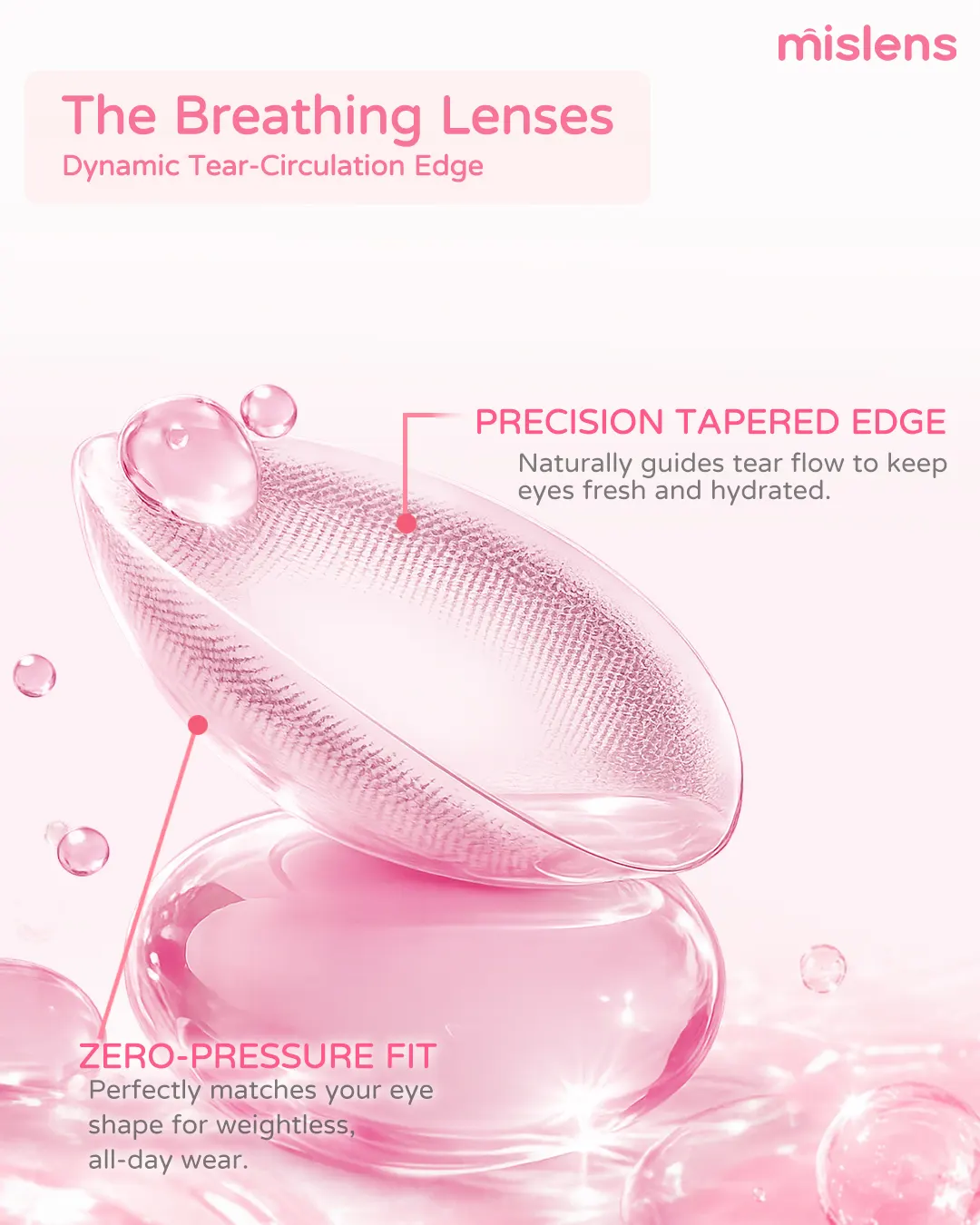
A product can look different without being commercially suitable.
That distinction matters when evaluating Vitamin B12 clear contact lenses.
The recognizable pink soaking solution gives the product an immediate visual identity and helps retailers introduce a clear lens without relying only on price, prescription range, or replacement cycle. But a distinctive presentation is only one part of the purchasing decision.
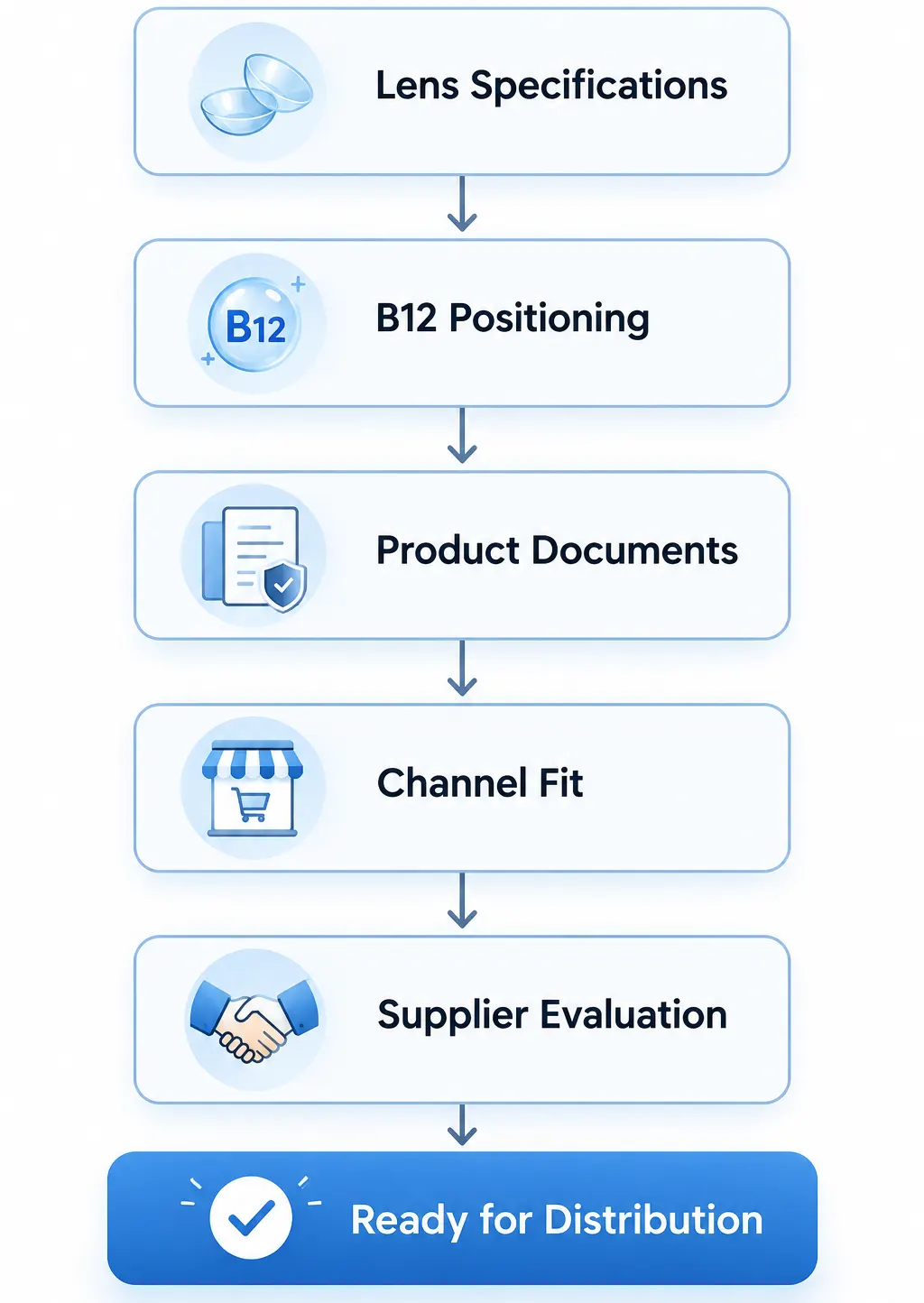
Before adding a B12 clear lens range, optical distributors still need to examine the lens specifications, understand exactly where Vitamin B12 is used, review the available product documents, assess channel suitability, and plan how the range will fit into the existing portfolio.
Mislens Vitamin B12 lenses are prescription clear contact lenses stored in a Vitamin B12 soaking solution. They are positioned for professional distribution channels seeking a more recognizable alternative to conventional clear lenses.
Buyers who are still comparing the commercial difference can first read [Why Vitamin B12 Prescription Clear Contact Lenses Stand Out from Ordinary Clear Lenses].
For buyers already considering the range, the following six checks provide a practical evaluation framework.
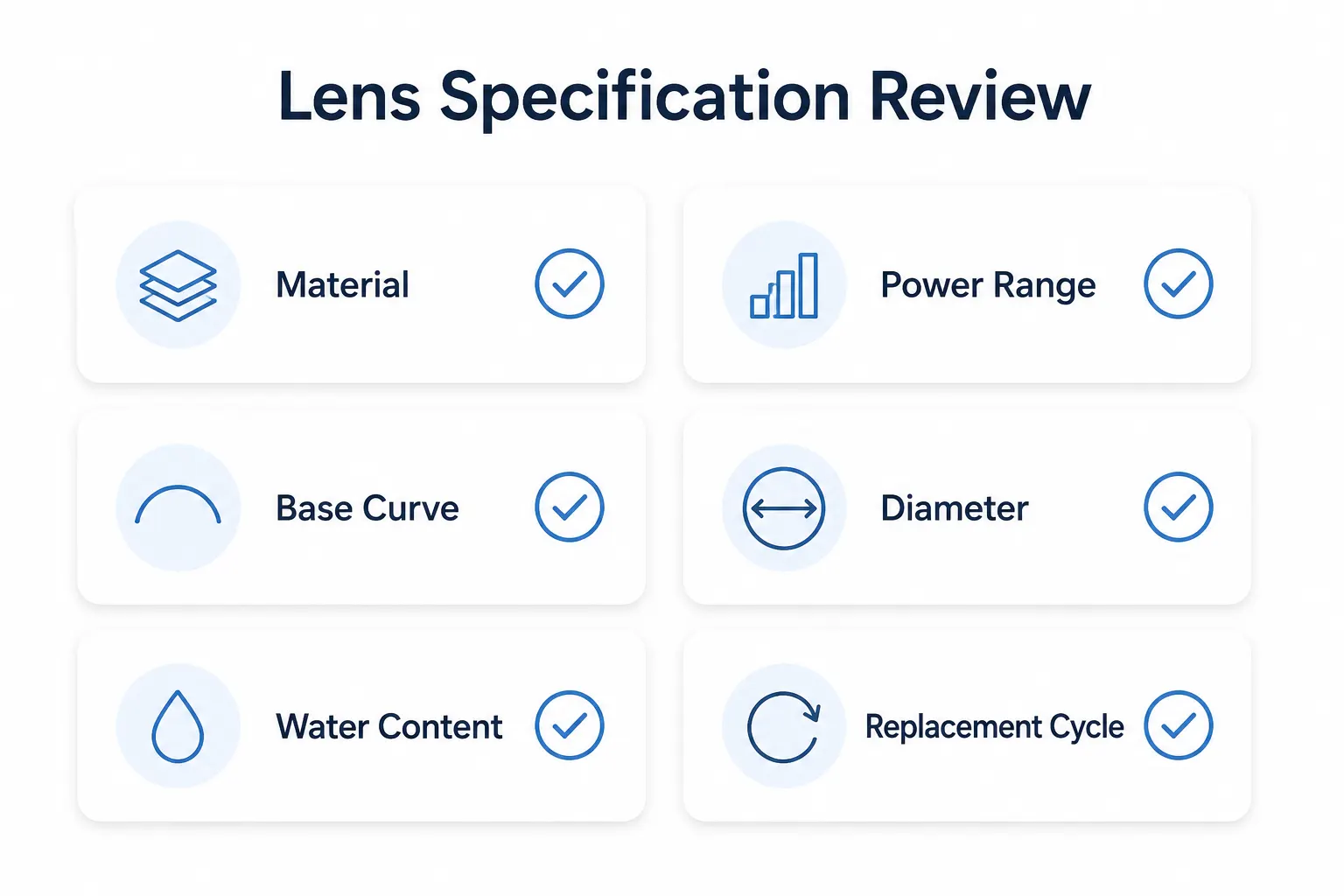
1. Start with the Core Lens Specifications
The Vitamin B12 concept may create initial interest, but the lens itself determines whether the product fits the market.
Begin with the product specification sheet rather than the packaging story.
The basic review should cover:
-
Lens material
-
Replacement cycle
-
Available power range
-
Base curve
-
Overall diameter
-
Water content
-
Packaging format
-
Storage and handling information
These details affect product positioning, customer suitability, inventory planning, and the number of prescription SKUs a distributor may need to manage.
A broad power range may suit a professional optical network, but it also increases stock complexity. A narrower opening assortment may reduce initial inventory pressure, although it may not meet the needs of every retailer.
The right balance depends on the sales channel.
An optical chain may need reliable coverage of frequently requested powers across multiple locations. An independent retailer may prefer a smaller test range. A regional distributor may need enough depth to serve different accounts without creating excessive slow-moving stock.
Before placing an order, confirm which powers are available, which are normally included in a starting assortment, and how lower-demand powers are replenished.
Vitamin B12 creates differentiation. The lens specifications determine commercial fit.
2. Confirm Exactly What “Vitamin B12” Means
“Vitamin B12 contact lens” is not a sufficiently precise product description.
A buyer needs to know where Vitamin B12 appears in the product system. It could refer to the lens material, a coating, a manufacturing ingredient, or the soaking solution. These descriptions are not interchangeable.
In the Mislens range, Vitamin B12 refers to the soaking solution rather than the lens material itself.
The product is therefore best described as:
A prescription clear contact lens stored in a Vitamin B12 soaking solution with a distinctive pink appearance.
This wording separates the lens from the solution and keeps the product explanation clear.
The lens provides prescription vision correction. The soaking solution forms part of the product presentation and differentiated positioning.
That distinction matters because vague language can encourage unsupported claims at the distributor or retail level.
Review Product Claims Before Using Them
Comfort and performance statements should be tied to supporting evidence.
Before using claims such as improved comfort, reduced dryness, better moisture retention, or longer comfortable wearing time, ask what tests or technical documents support them.
Without that evidence, factual product language is more appropriate:
-
Prescription clear contact lens
-
Vitamin B12 soaking solution
-
Recognizable pink solution
-
Differentiated clear lens presentation
-
Available prescription powers
-
Product intended for prescription vision correction
Retailers should not describe the product as something that:
-
Nourishes the eyes
-
Delivers nutritional benefits
-
Treats dry eye
-
Repairs eye tissue
-
Prevents eye disease
-
Functions as medicine or an eye treatment
The most credible product story is not the most dramatic one. It is the one that can be explained consistently by the supplier, distributor, and retailer.
3. Review the Product and Market Documents
A visually distinctive product still requires the same documentation discipline as any other prescription contact lens.
The presence of certificates or approval logos on a website does not by itself confirm that the exact product is suitable for a particular destination market.
A useful review begins with product-specific information.
Request materials such as:
-
Product specification sheet
-
Lens material information
-
Available power range
-
Base curve and diameter
-
Packaging specifications
-
Labeling information
-
Storage instructions
-
Handling information
-
Manufacturer details where applicable
-
Product images matching the supplied version
The product name, manufacturer, model details, and packaging information should remain consistent across the available documents.
Any mismatch should be clarified before ordering.
Check Whether the Documents Cover the Exact Product
Three separate questions need to be answered:
-
Does the document exist?
-
Does it cover the exact product or model?
-
Is it relevant to the destination market?
These are not the same thing.
A document may be genuine and current without necessarily covering the precise model being purchased or satisfying the requirements of the target country.
For each relevant document, review:
-
Certificate holder
-
Manufacturer name
-
Product scope
-
Model or product family coverage
-
Issue date
-
Expiry date
-
Market relevance
-
Relationship to the packaging and product being supplied
Europe, North America, and Middle Eastern markets may differ in registration, labeling, importer responsibility, language, and channel requirements.
The supplier should provide accurate product information. The buyer should also confirm destination-specific requirements with the appropriate regulatory or professional advisers where necessary.
Do Not Judge Compliance by Logo Count
A long row of logos may look reassuring, but professional buyers need to understand what each document actually covers.
Document relevance is more important than document volume.
This is particularly important for distributors supplying optical stores, pharmacy groups, or other channels that may conduct their own product review before accepting a new range.
4. Check the Channel and Portfolio Fit
A product can be properly documented and still be a poor fit for a particular sales channel.
B12 clear lenses create the most value when the retailer can explain the product accurately and give it a clear position within the assortment.
Optical Stores
Optical stores are a natural potential channel because prescription clear lenses already belong within their product mix.
Staff can explain the prescription range, replacement cycle, lens specifications, and the role of the soaking solution.
The range may be useful for retailers that want to offer a more recognizable clear lens option without moving the customer into colored lenses.
Pharmacy and Healthcare Retail
Pharmacy groups often need products that can be explained consistently across multiple locations.
For this channel, packaging clarity and standardized product language are especially important.
The product should communicate:
-
What it is
-
Whether it is prescription
-
The replacement cycle
-
The number of lenses
-
The role of the B12 soaking solution
-
Relevant usage and storage information
The concept should remain easy for staff to explain without turning it into a medical claim.
Beauty-Oriented Retail
Beauty and lifestyle retailers may respond strongly to the pink solution, packaging, and visual presentation.
However, the product remains a prescription contact lens. It should not be treated as an ordinary beauty accessory.
Distributors need to ensure that retailers can manage the prescription range and present the required lens information correctly.
Price-Driven Wholesale
The range may be less effective in channels where products are compared almost entirely by unit price.
Its commercial value comes from differentiation, product education, shelf identity, and clearer positioning.
If the downstream retailer does not explain products and the customer sees only price, much of that value may disappear.
Give the Product a Defined Portfolio Role
A B12 clear lens should not be added simply because it is new.
It needs a specific role.
Possible roles include:
-
A differentiated option alongside an ordinary clear lens
-
A dedicated clear lens range for optical or pharmacy accounts
-
A product for selected higher-service retailers
-
A test range for markets seeking non-price differentiation
-
An alternative clear lens category with stronger visual identity
In many cases, the range works better as a complement than as a complete replacement for an established clear lens.
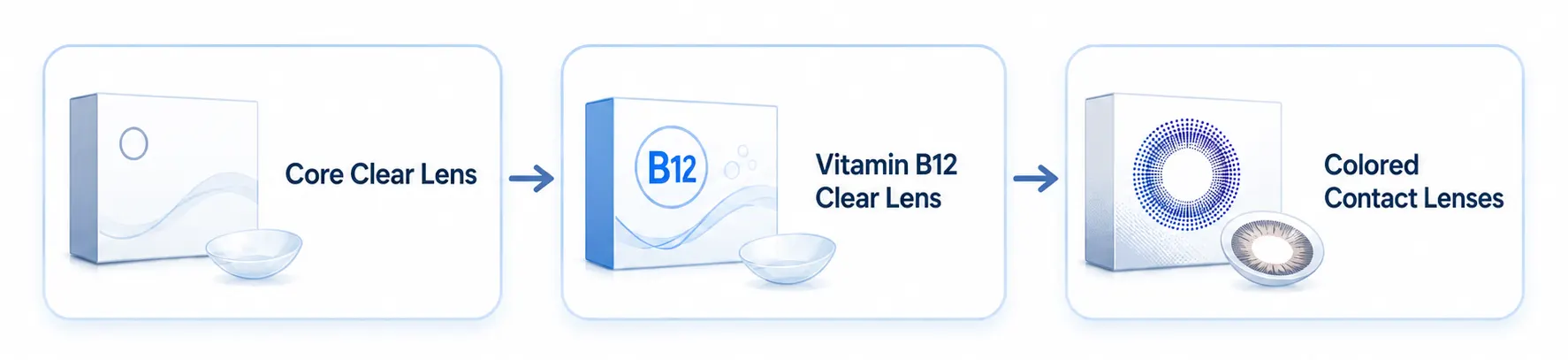
A simple portfolio structure may look like this:
| Portfolio Level | Product Role |
|---|---|
| Core Clear Lens | Familiar prescription option with straightforward positioning |
| Differentiated Clear Lens | Vitamin B12 concept with stronger visual identity and retail explanation |
| Colored Lens Range | Cosmetic color, enlargement, and style choice |
This structure gives each category a clear purpose and helps sales teams explain why more than one clear lens option exists.
Account for Prescription SKU Complexity
Prescription products require more inventory planning than a single non-prescription item.
Each additional power creates another SKU to forecast, store, and replenish.
Before launching the range, consider:
-
Initial prescription coverage
-
Expected demand by power
-
Slow-moving power risk
-
Packaging quantity
-
Replenishment frequency
-
Shelf and warehouse capacity
-
Expiry-date management
-
Demand from specific retail accounts
The concept may support stronger positioning, but the stock structure still needs to be practical.
5. Check Whether the Product Can Be Explained Clearly at Retail
A product story only works when the people selling the product understand it.
For a B12 clear lens, the explanation should remain simple:
-
It is a prescription clear contact lens.
-
The lens is stored in a Vitamin B12 soaking solution.
-
The pink solution creates a recognizable product appearance.
-
The product must still be handled and sold according to normal contact lens requirements.
This is enough to create a point of difference without making unsupported promises.
Prevent Overstatement
Retail staff may be tempted to turn the B12 concept into a stronger health claim than the product information supports.
Common problems include:
-
Describing B12 as eye nutrition
-
Calling the pink solution a treatment
-
Promising improved comfort to every wearer
-
Suggesting that the lens treats dry eye
-
Presenting it as a healthcare supplement
-
Ignoring normal fitting, usage, or handling requirements
Approved sales language should be established before the product reaches stores.
Evaluate Packaging Clarity
The pink soaking solution may attract attention, but the packaging must explain what the customer is looking at.
A buyer should be able to identify quickly:
-
That it is a contact lens
-
That it is a prescription clear lens
-
The prescription information
-
The replacement cycle
-
The package quantity
-
The role of the B12 soaking solution
-
Required storage and usage information
Visual identity creates attention. Clear product information creates confidence.
Local-language labels, importer information, warnings, symbols, and registration details may vary by destination market. These requirements should be reviewed before the final order is confirmed.
Ask What Sales Support Is Available
For Mislens distribution partners, the useful question is not only what makes the product visually different, but what information is available to help importers, sales teams, and retailers introduce it accurately.
Useful support may include:
-
Product specification sheets
-
Accurate product descriptions
-
Prescription range information
-
Packaging images
-
Product photography
-
Retail education materials
-
Distributor product information
-
Supported sales claims
-
Digital content for product listings
Consistency across catalogs, websites, sales presentations, and store training helps protect the credibility of the range.
6. Assess the Supplier’s Operational Support
The first order tests the product.
Repeat orders test the supplier.
Prescription clear lenses may sell unevenly across different powers, which makes replenishment and communication especially important.
Before adding the range, understand how the supplier handles:
-
Available prescription powers
-
Order structure
-
Packaging consistency
-
Restocking
-
Unavailable powers
-
Repeat-order information
-
Lead-time confirmation
-
Product or document updates
Specific quantities, lead times, and commercial conditions should be confirmed for the intended market and cooperation model.
Look for Product Consistency
The supplier should maintain consistency across:
-
Lens specifications
-
Power labeling
-
Product naming
-
Packaging design
-
Batch identification
-
Traceability information
-
Product documents
-
Marketing images
-
Retail descriptions
Inconsistent information creates problems for importers, retailers, customer service teams, and compliance reviewers.
Judge the Quality of the Answers
Clear communication before the order is a useful signal of what cooperation may look like afterward.
A professional supplier should be able to explain:
-
Where Vitamin B12 is used
-
What the product is and is not
-
The core lens specifications
-
Which claims are supported
-
Which documents correspond to the product
-
Which requirements depend on the destination market
-
How the range should be presented to retailers
A distinctive product concept is valuable. The ability to support that concept accurately and consistently is more valuable over the long term.
Vitamin B12 Clear Contact Lens Buyer Checklist
| Evaluation Area | What the Buyer Should Confirm |
|---|---|
| Lens specifications | Material, power range, base curve, diameter, water content, and replacement cycle |
| B12 definition | Whether Vitamin B12 is used in the soaking solution and how it should be described |
| Claims | Which comfort or performance statements are supported by evidence |
| Product documents | Specifications, material details, packaging, storage, and handling information |
| Market relevance | Whether documents cover the exact product and apply to the destination market |
| Channel fit | Whether the intended retailers can explain and sell the product properly |
| Portfolio role | Whether the range complements or replaces an ordinary clear lens |
| SKU planning | Prescription coverage, inventory complexity, and replenishment needs |
| Packaging | Product clarity, labeling, and shelf communication |
| Sales support | Product education, imagery, documentation, and supported claims |
| Supplier operations | Product consistency, ordering, restocking, and communication quality |
Is a Vitamin B12 Clear Lens Right for Your Business?
The range is more likely to fit distributors that:
-
Already sell prescription clear lenses
-
Want to reduce dependence on price-only competition
-
Supply optical stores, pharmacies, or professional retail channels
-
Can manage prescription SKUs
-
Value accurate product documents
-
Can train retail staff
-
Have a defined assortment and replenishment plan
It may be less suitable for businesses that:
-
Buy only according to the lowest unit price
-
Cannot manage multiple prescription powers
-
Do not provide product education
-
Intend to rely on unsupported medical claims
-
Have not reviewed local contact lens requirements
-
Do not have a clear target channel
The key question is not whether the B12 concept attracts attention.
It is whether the lens, product documents, retail explanation, stock structure, and supplier support work together as a practical distribution opportunity.
Evaluate the Mislens Vitamin B12 Clear Lens Range
Request the current product specifications, available prescription range, packaging information, and relevant product documents for your market.
Tell the Mislens team your destination country and sales channel so we can help you assess whether branded distribution is a practical fit for your business.